Andamans to be developed as hub of India’s Blue Economy: Union Minister

Jitendra Singh highlighted the government’s focus on blue economy reflects PM Modi’s vision that India cannot develop in isolation by focusing only on the mainland while leaving behind island territories and coastal regions.

Union Minister Jitendra Singh on Saturday (January 17, 2026) said the Andaman and Nicobar Islands will be developed as a hub of India’s Blue Economy.

The Union Minister of State (Independent Charge) for Science and Technology and Earth Sciences said India’s future economic value addition will increasingly come from untapped marine resources as the country moves rapidly towards becoming one of the world’s top economies.

He highlighted the government’s strong focus on blue economy reflects Prime Minister Narendra Modi’s vision that India cannot develop in isolation by focusing only on the mainland while leaving behind island territories and coastal regions.

Addressing scientists and officials while on a visit to Atal Centre for Ocean Science and Technology for Islands (ACOSTI) to launch and review key marine technology initiatives aimed at strengthening the blue economy and livelihoods in Andaman and Nicobar Islands, he said the deep ocean mission will play a decisive role in India’s journey towards becoming a developed nation by 2047, as vast marine resources remain largely underexplored despite the country’s long coastline.

Mr. Singh recalled that Prime Minister Narendra Modi announced the Deep Ocean Mission from the ramparts of the Red Fort on Independence Day in both 2023 and 2024, underlining its strategic importance.

The blue economy may not be visible to people in the northern parts of the country, but it makes one of the largest contributions to the national economy,” the minister said.

The blue economy is the sustainable use of ocean and coastal resources for economic growth, improved livelihoods, and jobs, while also preserving marine ecosystem health.

Mr. Singh said India, which has rapidly climbed global economic rankings, must now focus on value addition from resources that have not been fully explored. “To move from the fourth-largest economy to the top, we must tap areas like the deep sea and marine biodiversity,” he said.

During the visit, he reviewed and announced initiatives, including open sea cage culture demonstrations for marine fishermen and seaweed cultivation, aimed at boosting livelihoods and promoting sustainable marine practices. He said technology transfer for these projects has already been completed.

“Every citizen, industry and institution has a role in nation-building,” the minister said.

Highlighting the role of biotechnology in blue economy, Mr. Singh said India’s dedicated biotechnology policy, Bio-E3 – Biotechnology for economy, environment and employment, supports innovations such as biodegradable alternatives to plastic derived from marine resources.

“Biodegradable marine-based products fulfill all three objectives: they generate jobs, protect the environment and build a new bio-economy,” he said, adding that the Department of Biotechnology and the Ministry of Earth Sciences are working together on such projects.

The Union Minister said Andaman and Nicobar Islands offer unique marine species and ecological conditions that cannot be replicated elsewhere, making the region ideal for advanced marine research. He also announced the launch of a coral fish development project, aimed at both domestic consumption and export markets.

The minister noted growing global demand for non-animal food products, marine-based nutraceuticals and medicines, particularly in Europe, and said India could offer a diversified export basket by leveraging its marine biodiversity.

“Many high-potency medicinal compounds used in cancer and other treatments can be produced more cost-effectively from marine plants,” he said.

Mr. Singh proposed the creation of a collaborative cluster involving institutions under the Ministry of Earth Sciences, Department of Biotechnology and CSIR to maximise outcomes from blue economy initiatives.

He reviewed ongoing ocean science projects, interacted with scientists and fishermen, and emphasised women’s participation and self-help groups in marine-based livelihoods.

“This region has unmatched diversity from the Bay of Bengal to the Indian Ocean. With the right technology and collaboration, India can lead the global blue economy,” Mr. Singh said.

He also praised the administration’s efforts to promote development and tourism in the islands, noting that policy decisions have helped unlock the region’s economic potential.

source/content: thehindu.com (headline edited)
.
Indian defence firm ‘IG Defence’ secures army, navy orders for indigenous anti-drone system

Noida-based IG Defence said on Thursday that its IG T-Shul Pulse Anti-Drone System will be inducted by both services within nearly a month.

An Indian defence technology firm has secured orders from the army and the Indian Navy for an indigenously developed anti-drone system, signalling the armed forces’ growing focus on countering hostile unmanned aerial threats using domestic solutions.

Noida-based IG Defence said on Thursday that its IG T-Shul Pulse Anti-Drone System will be inducted by both services within nearly a month.

The company said the orders aim to strengthen operational capabilities to disrupt and neutralise hostile drones deployed for surveillance, disruption and cross-border infiltration.

Lightweight and rapidly deployable, the IG T-Shul Pulse Anti-Drone System is meant for frontline troops, perimeter security, and the protection of military bases and “critical strategic assets,” the firm said in a statement.

“It offers an effective jamming range of up to two kilometres under line-of-sight and interference-free conditions, providing tactical units with an immediate response option against emerging aerial threats,” IG Defence said.

The IG T-Shul Pulse is described as a “handheld, electronic warfare-based counter-drone jammer designed to disrupt and neutralise hostile drones in active operational environments.”

The company specialises in the design, development and deployment of advanced unmanned aerial systems (UAS), short-range missile systems, and counter-unmanned solutions.

According to IG Defence, the system marks a shift from legacy single-function jammers. It employs a multi-band, directionally controlled electronic denial architecture developed for frontline military use.

“The emphasis on directional electronic suppression allows threat engagement without unnecessarily degrading friendly communications or onboard naval systems,” the statement said.

By focusing electronic energy along the threat axis, the system improves neutralisation while reducing electromagnetic spill over and limiting cyber and electronic attack surfaces.

This enables “reliable deployment in contested electromagnetic environments on land and at sea,” the firm said.

IG Defence said the induction reflects the armed forces’ increasing reliance on domestic defence technology under the ‘Make in India’ and ‘Aatmanirbhar Bharat’ initiatives.

The system is entirely designed, developed and manufactured in India, with current production capacity running into the hundreds and scalable to meet operational requirements.

source/content: telegraphindia.com (headline edited)

Indian Army successfully builds third 120-feet-long Bailey bridge in Sri Lanka

This achievement follows the earlier successful launch of two Bailey bridges in the Jaffna and Kandy regions.

The Indian Army’s Engineer Task Force has successfully constructed the third Bailey Bridge, measuring 120 feet, at KM 15 on the B-492 Highway in Sri Lanka.

The bridge, located in the Central Province, reconnects the Kandy and Nuwara Eliya districts, restoring a critical lifeline that had remained disrupted for over a month following the devastation caused by Cyclone Ditwah.

Taking to social media X, the Indian Army posted, “The Indian Army’s Engineer Task Force, after successfully launching two critical Bailey bridges in the Jaffna and Kandy regions, has constructed the third Bailey Bridge of length 120 feet at KM 15 on the B-492 Highway in Sri Lanka’s Central Province.”

“Linking the Kandy and Nuwara Eliya districts, the bridge will restore a vital lifeline which was cut off for over a month in the aftermath of Cyclone Ditwah. This effort reaffirms India’s steadfast commitment to Sri Lanka and the Neighbourhood First policy,” the post read.

This achievement follows the earlier successful launch of two Bailey bridges in the Jaffna and Kandy regions. Collectively, these engineering efforts have restored road connectivity, improved access to essential services, and provided much-needed relief to communities affected by the cyclone.

Cyclone Ditwah, which struck Sri Lanka late last year, triggered widespread flooding, landslides, and large-scale infrastructure damage, overwhelming local disaster-response mechanisms.

Operation Sagar Bandhu, launched in November 2025, enabled India to provide urgent Humanitarian Assistance and Disaster Relief (HADR), including restoration of roads, bridges, and essential services. By swiftly reestablishing connectivity along the B-492, the Indian Army has not only facilitated daily life for affected communities but also strengthened bilateral ties and goodwill between India and Sri Lanka.

This effort reaffirms India’s steadfast commitment to Sri Lanka and the Neighbourhood First policy.

Under its ‘Neighbourhood First’ policy, Government is committed to developing friendly and mutually beneficial relations with all its neighbours.

India is an active development partner and is involved in several projects in the following countries – Afghanistan, Bangladesh, Bhutan, Maldives, Myanmar, Nepal, Pakistan, Sri Lanka. India’s policy of ‘Neighbourhood First’ focuses on creating mutually beneficial, people-oriented, regional frameworks for stability and prosperity. India’s engagement with these countries is based on a consultative, non-reciprocal and outcome-oriented approach, which focuses on delivering benefits like greater connectivity, improved infrastructure, stronger development cooperation in various sectors area, security and broader people-to-people contacts.

Strengthening India’s ties with Sri Lanka, earlier, Lok Sabha Speaker Om Birla met Sri Lanka Parliament Speaker Jagath Wickramaratne on the sidelines of the 28th Conference of Speakers and Presiding Officers of the Commonwealth (CSPOC) held in New Delhi.

They discussed close parliamentary cooperation and recalled the time-tested bonds of friendship, mutual support, and shared democratic traditions between India and Sri Lanka. The two leaders also discussed deeper engagement in technology-driven parliamentary innovation.

“Recalled our earlier interactions and the strong, time-tested bonds between India and Sri Lanka, rooted in close friendship, mutual support, and shared democratic traditions. Our discussions highlighted close Parliament-to-Parliament cooperation, including regular exchanges, formation of friendship groups, and collaboration in policy and programme design,” Om Birla said in a post on X.

“We discussed deeper engagement in technology-driven parliamentary innovation, including AI-enabled systems, real-time multilingual translation, and capacity building through PRIDE. Hoped that the strong people-to-people connect, cultural linkages including Bodh Gaya as a shared pilgrimage centre, and continued parliamentary dialogue will further strengthen India-Sri Lanka relations in the years ahead,” he added.

source/content: thehindu.com (headline edited)

PM Modi flags off India’s first Vande Bharat sleeper train from West Bengal’s Malda

“By significantly reducing travel time by around 2.5 hours on the Howrah–Guwahati route, the train will also give a major boost to religious travel and tourism,”a statement issued by the PMO stated.

Prime Minister Narendra Modi on Saturday (January 17, 2026) flagged off the country’s first Vande Bharat sleeper train between Howrah and Guwahati (Kamakhya) from Malda Town station in north Bengal.

He also virtually flagged off the return Guwahati–Howrah Vande Bharat sleeper train from Malda.

Developed to meet the growing transportation needs of modern India, the fully AC Vande Bharat sleeper train would offer passengers an “airline-like travel experience at economical fares”, a statement issued by the PMO stated.

The train will make long-distance journeys faster, safer, and more convenient, it said.

“By significantly reducing travel time by around 2.5 hours on the Howrah–Guwahati route, the train will also give a major boost to religious travel and tourism,” the statement added.

Later at a public programme in Malda, the PM is scheduled to dedicate to the nation, and lay the foundation stone of multiple rail and road infrastructure projects, worth ₹3,250 crore, aimed at strengthening connectivity and accelerating development in Bengal and the Northeast

On a two-day visit to eastern India, PM Modi is scheduled to criss-cross poll-bound West Bengal and Assam, blending high-voltage political messaging with a clutch of infrastructure launches as the countdown to the 2026 Assembly elections enters its decisive phase.

source/content: thehindu.com (headline edited)

Indian firms to run control and instrumentation at Russian-designed Kudankulam 5 and 6 reactors

Public sector Electronics Corporation of India Limited (ECIL) and Mumbai-based TEMA India have been awarded the nearly Rs 1,600-crore project to set up the systems in 42 months.

A consortium of two Indian companies has won the contract for installing and managing the control and instrumentation package at the under-construction Kudankulam 5 and 6 nuclear reactors, marking another step forward towards greater indigenisation of the nuclear ecosystem in the country.

Public sector Electronics Corporation of India Limited (ECIL) and Mumbai-based TEMA India have been awarded the nearly Rs 1,600 crore project to set up the systems in 42 months.

Control and instrumentation package comprises all the equipment, sensors, logic software and other systems that monitor the plant functioning, facilitate decision-making, and ensure an efficient and safe operation.

ECIL, a public sector company under the Department of Atomic Energy, was set up mainly to do the control and instrumentation work at the indigenous Indian reactors, and has been running the systems at all the Indian-made Pressurised Heavy Water Reactors. But this is the first time, it has tied up with a private company to set up control and instrumentation at foreign made reactors.

Only reactors designed overseas

The Kudankulam nuclear complex hosts Russian-designed 1,000 MW VVER reactors. The first two reactors in the complex, the only foreign-designed reactors in India right now, have been operational for more than a decade. Units 3 to 6 are under various stages of construction. Control and instrumentation of the first two units was tied to the overall reactor supply framework. With units 3 and 4, a process of indigenisation of these systems was started. An Indian company BGR Systems provided many of the specified equipment and sub-systems, under the overall architecture designed by the Russian suppliers. But for units 5 and 6, the consortium of ECIL and TEMA have been entrusted with end-to-end responsibility, including engineering, integration, testing and execution.

This is in keeping with the policy to incentivise greater role for Indian companies in the nuclear sector which is poised for a significant expansion following the recent change in the nuclear energy law which enables private players, including foreign entities through partnerships, to establish and operate nuclear power plants.

While a company like ECIL has long experience in this field, the presence of TEMA, an engineering and manufacturing company with a rapidly growing footprint in the nuclear sector, in the consortium would ensure enhanced capacity building in other Indian firms as well as they prepare for increased role in the nuclear industry. Founded by directors H K Sippy and Chetan Doshi, TEMA had recently been entrusted with the job of testing the equipment required for ‘upgrading of depleted heavy water’ at the PHWRs, a job that used to be carried out by Bhabha Atomic Research Centre (BARC) till now.

“This is evidence of our TEMA’s excellent track record in the nuclear field, and a recognition that private companies like TEMA can deliver quality work with very high safety standards,” Narendra Rao, chief operating officer of the company, said.

source/content: indianexpress.com (headline edited)

Silk kite, replica of Diamond DA62 propeller aircraft gifted to German Chancellor Merz

Combining German aeronautical design with Indian metalworking expertise, the artefact represents cooperation, shared values and a strong, evolving partnership between the two nations, the officials said.

A wall-mountable silk kite crafted from one of India’s most prestigious textiles, Patola silk, and a custom pilot logbook made from high-quality leather are among the gifts presented to German Chancellor Friedrich Merz during his just-concluded visit to India.

The gifts include a hand-crafted brass replica of Chancellor Merz’s Diamond DA62 propeller aircraft created by skilled artisans in Uttar Pradesh’s Moradabad, an internationally renowned centre for metal craftsmanship, officials said on Wednesday (January 14, 2026) .

Finished with gold plating, the piece reflects a blend of precise technical processes and human artistry.

Inspired by an aircraft known for efficiency, safety, and advanced design, the replica symbolises forward-looking leadership and responsible governance. Combining German aeronautical design with Indian metalworking expertise, the artefact represents cooperation, shared values and a strong, evolving partnership between the two nations, the officials said.

The German leader was given a custom pilot logbook crafted from high-quality leather chosen for durability and graceful ageing. Featuring subtle gold embossing, it combines dignified aesthetics with functional elegance.

Produced in India by skilled craftsmen, the logbook reflects the country’s tradition of fine leatherwork adapted to contemporary design standards.

Emphasising consistency, refinement, and longevity, it symbolises precision, foresight, and meticulous effort — core values shared by aviation and leadership, officials said.

Mr. Merz was also given a wall-mountable silk kite crafted from Patola silk, one of India’s most prestigious textiles originating from Patan in Gujarat.

Woven using the rare double-ikat technique — where both warp and weft threads are resist-dyed before weaving — the fabric embodies exceptional precision, patience and foresight, producing perfectly aligned motifs visible on both sides.

The traditional geometric and floral patterns symbolise balance, continuity, and harmony. Shaped into a kite, the textile draws on India’s cultural association of kite flying with aspiration and freedom, transforming a once-ephemeral object into a lasting artefact of meaning.

The form also creates a subtle cultural dialogue between India and Germany, linking India’s reverence for time-honoured craftsmanship with Germany’s values of engineering excellence, structural clarity and respect for process, the officials said.

source/content: thehindu.com (headlines edited)

From 60 pc of global cases to zero: India celebrates 15-year milestone in polio elimination

New Delhi, Tuesday marked a historic milestone in India’s public health journey as the country completed 15 years since its last reported case of wild poliovirus.

India’s transition from a polio hotspot to a global leader in immunisation is being hailed by experts as a triumph of political will and community-level execution.

In 2009, India accounted for 741 polio cases, representing 60 per cent of the global burden at the time. However, through an unprecedented scale-up of resources, the country reported zero cases in under two years. The last case was reported in 2011.

“Fifteen years after India recorded its last polio case, we are reminded of the extraordinary effort it took to reach this point. Frontline workers built trust in every community and the country delivered vaccines at a scale few thought possible,” said Dr Naveen Thacker, executive director of the International Paediatric Association and a recipient of the Goalkeeper Champion Award 2025.

He added that this commitment shows that eradication is achievable even under the most-challenging conditions.

The success of the campaign relied on a massive annual mobilisation where approximately 100 crore doses of the polio vaccine were delivered to 17.2 crore children.

This was achieved despite significant hurdles, including a population exceeding 100 crore, poor sanitation and the difficulty of reaching remote communities.

“Our polio-free status reflects sustained vigilance, strong health systems and active community participation through a well-designed campaign strategy. The Ministry of Health and Family Welfare continues to ensure that no child is missed by prioritising last-mile immunisation, especially among mobile and high-risk populations. Frontline health workers and community partners play a vital role in building trust and addressing vaccine hesitancy,” the health ministry said.

These efforts are strengthened through technology-driven platforms, such as U-WIN, e-VIN and Safevac, which enhance planning, monitoring and service delivery.

“By integrating Jan Bhagidari with digital innovations, we remain firmly committed to sustain the polio-free status,” the ministry said.

Officials noted that the infrastructure built for polio, including high-quality disease surveillance and contact tracing, has now become the backbone of India’s broader health goals. The country’s routine immunisation coverage has subsequently climbed to more than 93 per cent.

However, health experts have warned against complacency. While the wild poliovirus remains endemic in only two countries, variant poliovirus outbreaks continue to emerge globally in areas with low immunisation coverage. These “variant” cases occur when the weakened vaccine virus circulates in under-immunised populations and evolves.

India is now playing a critical role in the final push for global eradication. Hyderabad-based Biological E is one of the only two manufacturers in the world producing the novel oral polio vaccine type 2 , a key tool in controlling these variant outbreaks.

“Immunisation remains our strongest protection for every child. This milestone should inspire the world to push forward and finish the job against polio everywhere,” Thacker said.

Since 2011, India has maintained its polio-free status through regular national and sub-national immunisation Days, mobilising hundreds of thousands of volunteers to ensure that every child under the age of five is protected.

The officials emphasised that India is well-positioned to support other countries by deploying technical experts and sharing operational strategies to ensure a polio-free world.

This article was generated from an automated news agency feed without modifications to text.

source/content: hindustantimes.com (headline edited)

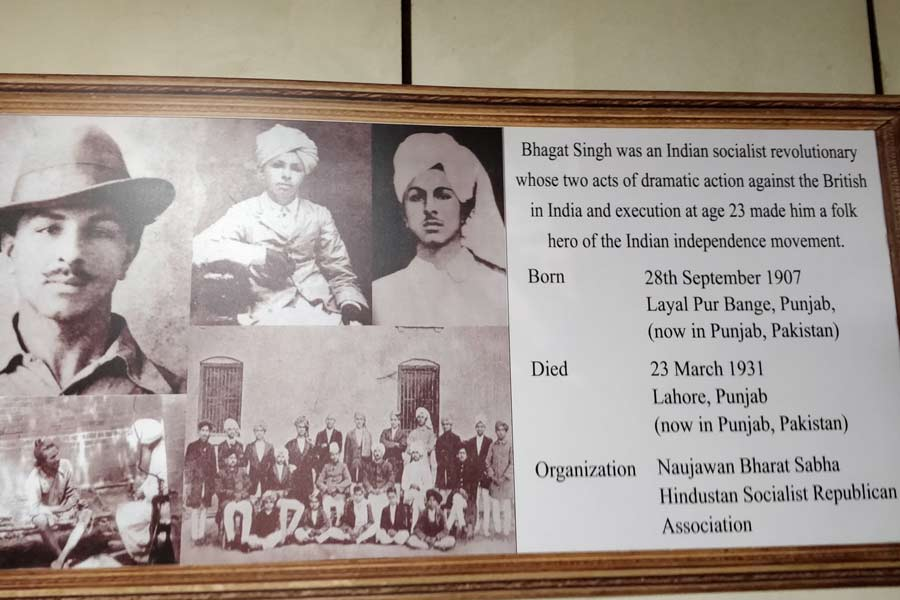
Punjab seeks UK govt’s help to retrieve Bhagat Singh trial records held in British archives

Bhagat Singh, aged 23, was hanged on March 23, 1931, along with Sukhdev and Rajguru, for the murder of British police officer John Saunders in what came to be known as the Lahore conspiracy case.

The Punjab government has sought the United Kingdom’s assistance in procuring films, tapes and other archival documentation linked to the trial proceedings of freedom fighter Bhagat Singh.

Chief Minister Bhagwant Mann made the request in a letter dated January 9 to British Deputy High Commissioner Alba Smeriglio.

“It is learnt that original audio/video recordings and archival documentation pertaining to the trial proceedings of Shaheed Bhagat Singh, Shaheed Sukhdev Thapar, and Shaheed Shivaram Hari Rajguru are presently held by concerned authorities in Scotland, reportedly preserved within a museum/institution maintaining historical legal archives of that era,” Mann wrote.

According to the state government, the records carry “profound historical and emotional significance” for the people of Punjab and are also of importance to global scholars of history and human rights.

The Punjab government has sought the United Kingdom’s assistance in procuring films, tapes and other archival documentation linked to the trial proceedings of freedom fighter Bhagat Singh.

Chief Minister Bhagwant Mann made the request in a letter dated January 9 to British Deputy High Commissioner Alba Smeriglio.

“It is learnt that original audio/video recordings and archival documentation pertaining to the trial proceedings of Shaheed Bhagat Singh, Shaheed Sukhdev Thapar, and Shaheed Shivaram Hari Rajguru are presently held by concerned authorities in Scotland, reportedly preserved within a museum/institution maintaining historical legal archives of that era,” Mann wrote.

According to the state government, the records carry “profound historical and emotional significance” for the people of Punjab and are also of importance to global scholars of history and human rights.

Archived pictures of Bhagat Singh at BSF Memorial, Hussainiwala, Punjab.(Facebook@Chaman Lal)

“The Punjab Government seeks access to these archival materials for academic study, digital preservation, and public exhibition at the ‘Shaheed Bhagat Singh Heritage Complex’, Khatkar Kalan, district Shaheed Bhagat Singh Nagar, Punjab,” the chief minister wrote, seeking copies.

The Aam Aadmi Party leader also appealed to “universal ideals of justice, sacrifice, and human dignity” as principles behind the request to share material.

Bhagat Singh, aged 23, was hanged on March 23, 1931, along with Sukhdev and Rajguru, for the murder of British police officer John Saunders in what came to be known as the Lahore conspiracy case.

source/content: telegraphindia.com (headline edited)

Andhra Pradesh highway sets Guinness record for 24-hour paving

Officials said the paving was carried out under standard quality and monitoring procedures and was observed for compliance with the requirements set by Guinness World Records.

A highway project in Andhra Pradesh has been certified as the longest continuous bituminous concrete paving in a 24-hour period by Guinness World Records, Union road transport and highways minister Nitin Gadkari said on Sunday.

The record — 28.95 lane-kilometres of bituminous concrete laid in a single day — was set on January 6 on the Vanavolu–Vankarakunta stretch of National Highway (NH) 544G. It is part of the Bengaluru–Kadapa–Vijayawada Economic Corridor.

The highway project has also been recognised for the maximum quantity of material placed within 24 hours — 10,675 tonnes — according to officials.

Officials said the paving was carried out under standard quality and monitoring procedures and was observed for compliance with the requirements set by Guinness World Records.

“NHAI, in association with concessionaire M/s Rajpath Infracon Private Limited, achieved this historic feat through deployment of state-of-the-art construction equipment and machinery involving 70 tippers, five hot mix plants, one paver and 17 rollers. Supported by stringent quality assurance mechanisms, the process was monitored for quality control with the help of premier institutions including IIT Bombay, along with Original Equipment Manufacturers (OEMs), ensuring adherence to the highest standards of quality and safety,” NHAI said in an official statement.

This entry follows an earlier record set in June 2022, when a stretch of NH-53 in Maharashtra between Amravati and Akola was certified by Guinness World Records for laying 75 km of continuous bituminous concrete in a single lane in 105 hours and 33 minutes. That effort replaced the previous record held outside India.

source/content: hindustantimes.com (headline edited)

Jhalawar students plan to name asteroid after seven children who died in school collapse

The proposed name is PRAMISHKA, formed by combining the initials of the seven deceased children.

In a quiet corner of Rajasthan’s Jhalawar district, a group of school students who once scanned the night sky have found a way to turn astronomy into remembrance.

Students of Government Senior Secondary School, Unhel, who discovered four asteroids during 2020–2021, have decided to name one of them after seven children who died when a government school building collapsed in Piplodi village in July 2025.

Twenty-seven other students were seriously injured in the incident.

The asteroids, discovered as part of an international student programme, have now completed a full orbit around the Sun and have been assigned permanent numbers by Pan-STARRS at the international level.

This confirms that their orbits are fully established and scientifically verified. The four asteroids were discovered by Sugandha Kumari, Komal Kunwar, Harshita Dangi and Sanjay Kumar, who are now pursuing higher education in different colleges.

They participated in the IASC-NASA Asteroid Search Campaign under the guidance of Google-certified educator Dr Divyendu Sen, currently posted at Mahatma Gandhi Government School, Pachpahar in Jhalawar.

More than 100 students from the district have taken part in the programme so far and have collectively discovered 12 main-belt asteroids.

In a quiet corner of Rajasthan’s Jhalawar district, a group of school students who once scanned the night sky have found a way to turn astronomy into remembrance.

Students of Government Senior Secondary School, Unhel, who discovered four asteroids during 2020–2021, have decided to name one of them after seven children who died when a government school building collapsed in Piplodi village in July 2025.

Twenty-seven other students were seriously injured in the incident.

The asteroids, discovered as part of an international student programme, have now completed a full orbit around the Sun and have been assigned permanent numbers by Pan-STARRS at the international level.

This confirms that their orbits are fully established and scientifically verified. The four asteroids were discovered by Sugandha Kumari, Komal Kunwar, Harshita Dangi and Sanjay Kumar, who are now pursuing higher education in different colleges.

They participated in the IASC-NASA Asteroid Search Campaign under the guidance of Google-certified educator Dr Divyendu Sen, currently posted at Mahatma Gandhi Government School, Pachpahar in Jhalawar.

More than 100 students from the district have taken part in the programme so far and have collectively discovered 12 main-belt asteroids.

Speaking about the allotment of permanent numbers, Dr Sen said they received an email from the International Astronomical Search Collaboration (IASC) last month.

According to the communication, one of the four numbered asteroids has been reserved for the survey organisation, while the remaining three are open for name proposals by the student discoverers.

The naming process, he said, must follow international guidelines. Dr Sen told PTI that the students have formally expressed their wish to name one asteroid in memory of the children who died in the Piplodi collapse.

The proposed name is PRAMISHKA, formed by combining the initials of the seven deceased children — Payal (13), Priyanka (12), Meena (12), Harish (11), Kundan (10), Kanha (7), and Satish (8).

He added that other acronyms are also being considered before a final proposal is submitted.

“We did not want the naming to be just a symbolic act. The students told me that science becomes meaningful only when it touches lives. The name PRAMISHKA is formed from the combined initials of the Piplodi children. By sending this name to space, we want their memory to orbit the Sun forever. For us, this is not only astronomy; this is remembrance with love and dignity,” Dr Sen said.

He noted that asteroids remain in the solar system for millions of years and that once a name is approved by the International Astronomical Union, it becomes a permanent part of scientific literature.

“Our humble wish is that PRAMISHKA becomes that eternal identity for them,” he said.

Dr Sen said the final approval lies with the International Astronomical Union. “We are in touch with coordinators and authorities, and will submit the full supporting details when invited to do so,” he said.

Jhalawar Chief District Education Officer Ram Singh Meena also supported the move, telling PTI that naming an asteroid after the deceased children would be a true act of remembrance.

He said the education department has agreed to follow up on the request.

source/content: telegraphindia.com (headline edited)