Category Archives: Business & Economy

GLOBAL: NATIONAL: INTERNATIONAL TRADE: India-UAE bilateral trade set to surpass $100 billion target before 2030. UAE remains India’s 03rd Largest Trade Partner and 02nd Largest Export Destination

The bilateral trade between India and the United Arab Emirates (UAE) is on track to surpass the $100 billion target well before 2030, underscored by a notable 12.7 per cent (year-on-year) increase, according to a report on Tuesday.

The UAE remains India’s third-largest trading partner and second-largest export destination (FY2022-23).

According to a report by Primus Partners, Bilateral trade reached $85 billion in FY 2022-23 and is expected to cross the 2030 target of $100 billion well before the expected timeline.

The India-UAE economic relationship strengthened with the recent visit of Sheikh Khaled bin Mohamed bin Zayed Al Nahyan, the Crown Prince of Abu Dhabi, to India. The two countries signed five MoUs, following the meeting between Prime Minister Narendra Modi and the Crown Prince.

The India-UAE trade relations are entering a new era, driven by structural reforms like 2022 Comprehensive Economic Partnership Agreement (CEPA) that have dismantled long-standing barriers.

“This shows how this trade growth is not only strengthening existing sectors like gems, jewellery, and IT but is also paving the way for emerging industries such as green energy and food security,” said Nilaya Varma, CEO and Co-founder of Primus Partners.

Both countries lead the path for key collaborative ventures, including the India-Middle East-Europe Economic Corridor (IMEEC) as well as the India-Israel-UAE-US (I2U2) coalition.

The India-UAE economic relationship is set to be further cemented with initiatives like the implementation of a master dashboard to oversee critical infrastructure projects; establishment of a bilateral e-commerce marketplace for goods and services, potentially leveraging India’s Open Network for Digital Commerce (ONDC) model and creation of an online digital repository highlighting investable projects in identified strategic sectors,

Nader Haffar, Director of Primus Partners UAE, said that the bilateral relationship has evolved into a multifaceted partnership that is reshaping the future of regional and global trade.

“This synergy between two of the world’s fastest-growing economies is creating new opportunities, fostering innovation, and building a foundation for long-term prosperity that could serve as a global model for emerging market partnerships,” Haffar added.

Gems and jewellery, traditionally a cornerstone of trade, have seen increased activity under the CEPA. The metals, stones, gems, and jewellery sector is among India’s key exports to the UAE.

Additionally, India’s agricultural exports to the UAE, including cereals, sugar, fruits, vegetables, and tea, contribute significantly to the trade basket, helping to address the UAE’s food security objectives.

–IANS

source/content: in.investing.com (headline edited)

GLOBAL: NATIONAL: RANKING: India Ranks as Third Most Powerful Nation in Asia, Surpassing Japan in Asia Power Index

India has become the third most powerful nation in Asia, surpassing Japan in the Asia Power Index. The Asia Power Index report for 2024 indicated that strong post-COVID economic growth has led India to increase its economic capability by 4.2 points. The report also highlights that India performed well across all other resource measures, especially in future resources, where its score rose by 8.2 points. This growth suggests that India’s youthful population may deliver a demographic dividend in the decades to come, unlike many other countries in Asia.

India’s Diplomatic Influence has also risen in the Asia Power Index. In 2023, India increased its tempo of diplomatic activity, participating in the sixth-highest number of dialogues with countries included in the Asia Power Index. This helped India surpass Japan, reinforcing its status as the third-largest power in the index and reflecting its increasing geopolitical stature.

The Asia Power Index ranks 27 countries and territories based on their capacity to shape their external environment, with its scope reaching as far west as Pakistan, as far north as Russia, and as far into the Pacific as Australia, New Zealand, and the United States.

source/content: newsonair.gov.in (headline edited)

GLOBAL: NATIONAL: TREATIES: India signs High Seas Treaty for fair, equitable sharing of benefits (BBNJ) Agreement

The treaty follows an inclusive, integrated, ecosystem-centric approach based on the precautionary principle and promotes best available scientific knowledge.

India has signed the Biodiversity Beyond National Jurisdiction (BBNJ) Agreement, which seeks to promote the conservation of marine genetic resources and the fair and equitable sharing of benefits.

“India is proud to join the BBNJ Agreement, an important step towards ensuring that our oceans remain healthy and resilient,” external affairs minister S Jaishankar said in a post on X after singing the treaty at the United Nations headquarters in New York on Wednesday.

The agreement, or the High Seas Treaty, is an international accord under the United Nations Convention on the Law of the Sea (UNCLOS). The high seas cover areas nearly two-thirds (64%) of the ocean – almost half the planet’s surface. It includes some of the most ecologically vital, but critically threatened and least protected areas on earth; less than 1% of what is fully or highly protected.

The treaty aims to address the growing concerns over the long-term protection of marine biodiversity in the high seas. It sets precise mechanisms for the sustainable use of marine biological diversity through international cooperation and coordination. Parties cannot claim or exercise sovereign rights over marine resources derived from the high seas and ensure fair and equitable sharing of benefits.

The treaty follows an inclusive, integrated, ecosystem-centric approach based on the precautionary principle and promotes using traditional knowledge and the best available scientific knowledge. It seeks to minimise impacts on the marine environment through area-based management tools and establishes rules for conducting environmental impact assessments.

In March 2023, after five years of negotiations, the world reached a significant milestone in efforts to stem global biodiversity decline when nations agreed to the new High Seas Treaty to protect ocean life. Once it has been ratified by at least 60 countries, the treaty will provide the legal framework to address many of the governance gaps that have plagued the ocean and provide a roadmap to conserve biodiversity areas beyond national jurisdictions.

According to the High Seas Alliance, following two decades of discussions, the implementing agreement to UNCLOS on the conservation and sustainable use of marine biological diversity of areas beyond national jurisdiction – or High Seas Treaty – is the world’s first cohesive, international and legally binding framework to specifically protect high seas biodiversity.

At a workshop on the BBNJ in Chennai last month, PK Srivastava, an advisor to the Union earth sciences ministry, said the ministry will establish a dedicated institutional mechanism to oversee the developments regarding the agreement. “This authority will deal with the necessary regulations, studies, and other activities related to the treaty,” Srivastava said.

He emphasised the need for detailed discussions and modifications to existing legislation to ensure compatibility with the requirements for the effective implementation of the treaty. Srivastava said the Environment Protection Act could be used for the environmental impact assessment of the BBNJ Agreement.

source/content: hindustantimes.com (headline edited)

NATIONAL: IT & MANUFATURING / MADE IN INDIA : PM Modi launches indigenously developed Param Rudra Supercomputers

Showcasing India’s technological prowess, Prime Minister Narendra Modi on Thursday launched three Param Rudra supercomputers worth Rs 130 crore and developed indigenously as part of the National Supercomputing Mission.

The three supercomputers have been deployed in Pune, Delhi, and Kolkata to support cutting-edge scientific research.

“With Param Rudra Supercomputers and HPC system, India takes significant steps towards self-reliance in computing and driving innovation in science and technology,” PM Modi said while launching the supercomputers via video conferencing.

The Prime Minister also launched a High-Performance Computing (HPC) system for the fields of weather and climate.

Addressing the scientific community, PM Modi said there is no sector or industry which does not rely on technology and high-computing capability. He added that in this sphere, India’s share “should not be in bits and bytes but in terabytes and petabytes”.

“Therefore, this achievement proves that we are moving in the right direction at the right pace,” said the Prime Minister.

With the PARAM supercomputer, the Inter-University Accelerator Centre (IUAC) will boost research in material science and atomic physics in New Delhi while the S.N. Bose Centre in Kolkata will focus on areas including physics, cosmology, and earth sciences.

Meanwhile, the Giant Metre Radio Telescope (GMRT) in Pune will use the supercomputer to explore astronomical phenomena such as Fast Radio Bursts (FRBs).

According to the government, the Param Rudra supercomputer incorporates the latest cutting-edge hardware and software technologies. A significant portion of its components were manufactured and assembled in India.

Param Rudra is capable of handling complex calculations and simulations at a very high speed. These homegrown and developed supercomputers are prime examples of India’s technological advancements. These are used for research in fields such as weather forecasting, climate modelling, drug discovery, materials science, and artificial intelligence (AI).

The country’s National Supercomputing Mission (NSM) has been set up to provide the country with supercomputing infrastructure to meet the increasing computational demands of academia, researchers, MSMEs, and startups.

source/content: daijiworld.com (headline edited)

NATIONAL: IIMCAA Awards 2024: Anup Pandey wins journalist of the year trophy

Shagun Kapil won the agriculture reporter of the year, receiving a cash prize of ₹1 lakh.

 The Indian Institute of Mass Communication Alumni Association (IIMCAA) has officially announced the winners of the IIMCAA Awards 2024, recognising excellence in journalism, advertising, and public relations. The event was marked by the crowning of Anup Pandey as the ‘journalist of the year’, a title accompanied by a trophy, certificate, and a cash prize of ₹1.5 lakh.

In the agriculture reporter of the year category, Shagun Kapil emerged victorious, receiving a cash prize of ₹1 lakh. Other awardees, spanning diverse categories, were honored with trophies, certificates, and cash rewards of ₹50,000.

The winners across various categories were:

Rajat Mishra (Publishing Reporting)

Abhinav Goel (Broadcast Reporting)

Surabhi Singh (Producer)

Muhammad Sabith U M (Publishing Reporting in Indian Languages)

Shatarupa Samantaraya (Broadcast Reporting in Indian Languages)

Saransh Jain (Advertising)

Shillpi A Singh (PR)

Ofactor (Ad Agency)

Kaizzen (PR Agency)

The ‘Jury Special Mention’ category recognised noteworthy entries that narrowly missed out on the top honours. Awardees in this section included:

Abhishek Angad, Ritwika Mitra, Ashutosh Mishra, Manish Mishra, and Nidhi Tiwari (journalist of the year)

Diwash Gahatraj (agriculture reporting)

Parimal Kumar and Vishnukant Tiwari (broadcast reporting).

Rohan Kathpalia (producer of the year)

Supriya Sundriyal and Nikhil Swami (PR)

Distinguished attendees included former principal director general of PIB Kuldeep Singh Dhatwalia; ADG Raj Kumar; special commissioner of the Delhi government Sushil Singh; and Rahul Sharma, managing director of the US-India Business Council. The event was presided over by IIMCAA president Simrat Gulati, while executive president Gayatri Shrivastava hosted the ceremony.

During the event, a souvenir book featuring the profiles and accomplishments of the award winners was released by Awards Auditor Unni Rajen Shanker, Convenor Vineet Handa, Coordinator Puja Mishra, and General Secretary Deeksha Saksena.

source/content: hindustantimes.com (headline edited)

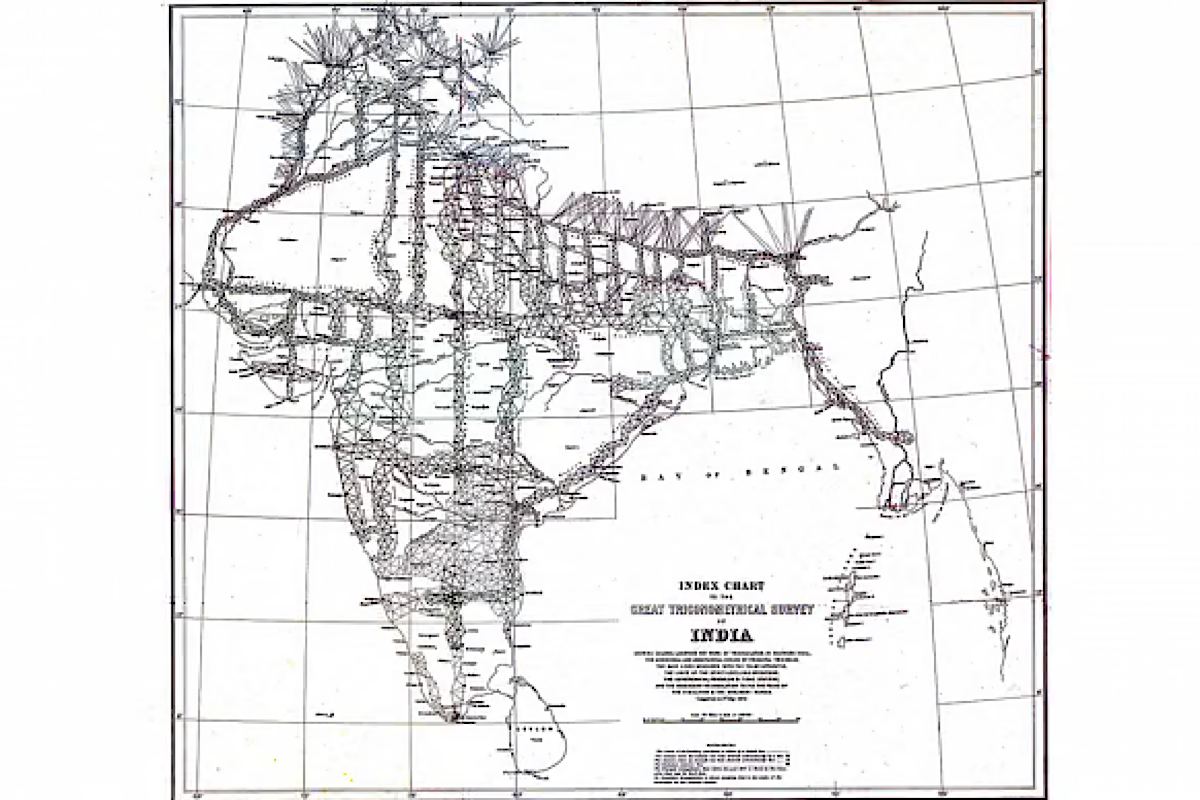
REGIONAL: SUBCONTINENT: NATIONAL: Survey that reshaped a sub-continent

In the early 19th century, a monumental scientific project began that would leave a profound mark on the Indian subcontinent.

Photo: SNS

In the early 19th century, a monumental scientific project began that would leave a profound mark on the Indian subcontinent. The Great Trigonometrical Survey of India, initiated in 1802, was not merely about cartography; it was a groundbreaking venture that reshaped the landscape of India through precision, innovation, and vision. Spearheaded by British infantry officer William Lambton under the East India Company, this survey transformed the understanding of the subcontinent’s geography and had far-reaching impacts on administration, economy and cultural heritage. The Great Trigonometrical Survey officially commenced on 10 April 1802, with the measurement of a crucial baseline near Madras (now Chennai). Major Lambton, who was tasked with leading this ambitious project, carefully selected a flat plain for the initial measurement.

The baseline stretched 7.5 miles (12.1 km) and was marked by St. Thomas Mount at the north and Perumbauk Hill at the southern end. This baseline was the first step in a meticulous process that aimed to map the vast Indian subcontinent with unprecedented accuracy. Lambton’s choice of a flat plain for the initial baseline was strategic. Accurate measurements were crucial for the success of the survey, and a flat, unobstructed baseline allowed for more precise calculations. The work began with the meticulous measurement of this baseline, which would serve as the foundation for the extensive triangulation network that followed. The Great Trigonometrical Survey utilized advanced trigonometric techniques to measure distances and angles across the vast expanse of India.

The method involved creating a network of triangles, using the baseline measurements as a reference point. By measuring angles and distances within these triangles, surveyors were able to map the terrain with remarkable precision. One of the most notable achievements of the survey was the accurate measurement of the meridian arc from the southern tip of India to Nepal. This endeavour required surveying through varied and challenging terrain, including the Himalayan mountain range. The precision achieved in this measurement allowed for the calculation of the Earth’s circumference with astonishing accuracy and contributed to global scientific knowledge. For the British East India Company, the survey was more than a scientific undertaking; it was a crucial tool for effective administration and control. The detailed maps produced by the survey enabled the British to manage the vast and diverse regions of India with greater efficiency.

Accurate geographical information facilitated better planning of infrastructure projects such as roads, railways, and irrigation systems. The survey’s precise maps were instrumental in the collection of land revenue, as they provided detailed information about land use and boundaries. This information was crucial for implementing administrative policies and managing the economic resources of the subcontinent. The improved accuracy in mapping also played a key role in the strategic planning of military campaigns and the consolidation of British rule across India. The detailed maps created by the Great Trigonometrical Survey had a transformative effect on the Indian economy. The accurate depiction of geographical features facilitated the construction of infrastructure that was vital for economic development.

Railways, roads, and irrigation systems were planned and executed with greater precision, fostering economic growth and integration. The expansion of the railway network, for instance, connected previously isolated regions, facilitating trade and commerce. This connectivity helped create a unified market across the subcontinent, stimulating economic activity and development. The survey’s work in mapping resources and land use patterns also contributed to the optimization of agricultural practices and resource extraction, further boosting economic growth. Beyond its immediate practical benefits, the Great Trigonometrical Survey left a lasting legacy in the fields of science and culture. The survey’s precision and methodology advanced the science of geodesy and set new standards for geographic measurement. The accurate geographic coordinates established by the survey influenced future scientific research and exploration. Culturally, the survey contributed to a deeper understanding of India’s diverse geography and historical landmarks. By documenting and mapping ancient sites and natural features, the survey helped preserve India’s cultural heritage.

The detailed maps provided insights into the region’s historical and cultural landscape, enriching the appreciation of India’s heritage. The significance of the Great Trigonometrical Survey is commemorated by several memorials across India. One notable example is Lambton’s Memorial in the village of Perumbauk, which marks the site where the initial baseline measurement began. These memorials serve as a testament to the monumental effort and achievements of the survey, honouring the contributions of Major Lambton and his team. The Great Trigonometrical Survey of India was a landmark project that reshaped the Indian subcontinent in multiple dimensions.

From its meticulous beginning with the measurement of a 7.5-mile baseline near Madras to its profound impacts on administration, economy, and culture, the survey was a transformative endeavour. Its legacy endures through the precise maps it produced, the infrastructure it helped develop, and the scientific advancements it inspired. The Great Trigonometrical Survey stands as a testament to the power of scientific innovation in shaping the course of history and transforming societies.

(The writer is Santosh Mathew, Associate Professor, Centre for South Asian Studies, Pondicherry Central University.)

source/content: thestatesman.com (headline edited)

GLOBAL: NATIONAL / SPACE : 40 years after astronaut Rakesh Sharma, Shubhanshu Shukla is the first Indian to travel to space: Here’s how is gearing up for ISS

In a monumental step for India’s space program, Group Captain Shubhanshu Shukla of the Indian Air Force (IAF) will pilot the Axiom-4 (Ax-4) mission to the International Space Station (ISS) in 2025, TOI has reported.

This mission will mark India’s first human presence aboard the ISS and its second government-sponsored human spaceflight in more than four decades, following Wing Commander Rakesh Sharma’s 1984 mission with the Soviet Union.

The Ax-4 mission is the result of a collaborative initiative between India and the United States. More than a year ago, during an official state visit to the U.S., Prime Minister Narendra Modi announced that an Indian astronaut would travel to the ISS. Following this, the Indian Space Research Organisation (Isro) signed a spaceflight agreement with Axiom Space, a leading American company in human spaceflight services.

Shukla, an experienced IAF test pilot, will be part of an international crew, with fellow Indian astronaut and backup pilot Group Captain Prashanth Nair also from the IAF. The mission will be commanded by renowned astronaut Peggy Whitson. Sharing details of Shukla’s responsibilities, Whitson told The Times of India, “As the Ax-4 pilot, Shukla will assist me in conducting essential spacecraft operations, such as navigation and docking procedures. Training will prepare him to handle emergencies and perform critical system checks. Additionally, Shukla will support scientific research by setting up and managing microgravity experiments.”

The Ax-4 mission is expected to play a crucial role in advancing India’s space capabilities, particularly as the country prepares for its own crewed mission, the Gaganyaan project. In a recent Instagram Live session, Isro Chairman S Somanath revealed that the Indian astronaut will conduct five experiments aboard the ISS as part of the Ax-4 mission, gaining valuable experience in space operations and international collaboration.

Whitson further elaborated on the rigorous training that Shukla and his fellow crew members are undergoing. “We work closely with NASA and other international space agencies to ensure smooth integration with ISS. Additionally, Axiom invests in cutting-edge medical research and technology to monitor and maintain astronaut health during missions,” she explained. “By leveraging these strategies, Axiom Space aims to mitigate risks and ensure the success of our missions.”

Training for the mission will be conducted at multiple facilities, including NASA, SpaceX, the European Space Agency (ESA), and the Japan Aerospace Exploration Agency (JAXA). The preparation covers all aspects of the mission, from safety protocols and health management to ISS systems operations. According to Whitson, “We practise in ISS mockups, reviewing procedures and enacting emergency scenarios to ensure we’re ready for any situation.”

The Ax-4 mission will utilize SpaceX’s Falcon 9 rocket and Dragon spacecraft, known for its advanced life support systems and automated docking capabilities. This will ensure a safe journey for the crew, who will spend up to 14 days aboard the ISS.

Joining Shukla and Whitson on the mission are specialists Slawosz Uznanski from Poland and Tibor Kapu from Hungary. Uznanski, an expert in radiation testing and space electronics, is a member of ESA’s 2022 Astronaut Reserve Class, while Kapu, selected for Hungary’s Hunor Astronaut Programme, brings his expertise in space radiation protection and pharmaceutical research.

Whitson emphasized the global significance of the Ax-4 mission, saying, “The Ax-4 crew will spend up to 14 days aboard ISS. This mission will realize the return to human spaceflight for India, Poland, and Hungary, marking each nation’s first mission to the space station in history and second govt-sponsored human spaceflight mission in over 40 years. This mission emphasizes how Axiom Space is redefining the pathway to low-Earth orbit and elevating national space programs globally.”

In addition to strengthening international cooperation, the Ax-4 mission will support the development of commercial space activities. “Axiom Space missions play a pivotal role in advancing international cooperation in space exploration. By partnering with organizations like ESA, Isro, and Hunor, Axiom fosters collaboration in human spaceflight, research, and technology development,” Whitson explained.

As Group Captain Shubhanshu Shukla gears up for this groundbreaking mission, India is poised to make significant strides in space exploration, bolstering its role on the global stage.

(With TOI inputs)

source/content: economictimes.indiatimes.com (headline edited)


NATIONAL: INNOVATION for VISUALLY IMPAIRED : ### Umang Sharma, an 11th Grader, Creates Affordable Keyboard for the visually impaired using AI

Umang Sharma, a junior student of Class 11 at Princeton Day School, has developed an affordable keyboard for the visually impaired using artificial intelligence (AI). His interest in AI, robotics, and engineering, coupled with his passion for coding, led him to improve Braille technology with the help of experts. His success in creating this innovative keyboard is a result of his deep interest in computer building and technology.

Globally, around 284 million people are visually impaired, 39 million of whom are completely blind. A staggering 70% are unemployed, and 90% are illiterate, which significantly limits their opportunities. Umang’s journey began when he discovered that Braille keyboards cost over $7,000, a price he found to be unaffordable for many. Realizing the need for a cheaper alternative, he conducted research but found no better options.

A significant challenge faced by the visually impaired is the lack of access to technology, which contributes to high unemployment and illiteracy rates. Umang identified this as a vicious cycle, where the inability to afford technology like Braille keyboards prevents visually impaired individuals from securing jobs, yet employment is necessary to purchase such tools.

Current market solutions for Braille keyboards include audio keyboards built into operating systems, physical Braille devices, and one-time-use stickers for standard keyboards. After analyzing these options, Umang identified key issues, such as high cost, usability, and durability. He designed prototypes, consulted Braille experts, and made improvements to address these shortcomings.

The result is an affordable, user-friendly keyboard for the visually impaired, priced at just $10, and nearly free if donated keyboards are used. The keyboard utilizes 3D-printed keys that are durable and can be easily attached to any keyboard.

Umang presented his project at two workshops held at the National Blind Association, Delhi, and the Silver Lining Blind School, where visually impaired youths from underprivileged backgrounds tested the keyboard. The feedback confirmed the effectiveness of the design, particularly for blind students and young children learning Braille. The keyboard helped improve their typing speed and key recognition, proving to be a faster alternative compared to conventional keyboards that require pressing each key to find the right one.

The National Blind Association, Delhi, praised Umang’s efforts, and the Silver Lining Blind School expressed gratitude for his dedication and hard work in serving the visually impaired. Umang has donated over 20 keyboards and is working on providing more units, benefiting over 250 students.

Following this success, Umang plans to distribute his innovative Braille keyboards to blind schools globally and has founded a non-profit organization called “Zedable” to support his mission.

source/content: pressnote.in (headline edited)

Make ‘BHASKAR’ one-stop digital platform for Indian startups: Piyush Goyal

Union Commerce Minister Piyush Goyal on Monday launched the Bharat Startup Knowledge Access Registry (BHASKAR) initiative, saying the platform will help bring hope, aspirations and success for the entrepreneurs to kickstart ambitious revolutions in the country.

Launched under the ‘Startup India’ programme in the national capital, BHASKAR — meaning ‘Rising Sun’ — has been aptly chosen to be the name of the digital platform.

Minister Goyal emphasised to make it a one-stop digital platform for data dissemination, exchange, interaction for the entire startup ecosystem, through simple easy to use links and easy to navigate technology — catalysing the growth and success of the startup ecosystem across India and beyond.

“BHASKAR as a concept will try to integrate all the people who are dreamers, doers and disruptors,” said the minister.

The government will put in more efforts to make the ecosystem socialised, democratic and visible to the world.

“Technology and interconnectivity will help Indians build ‘Brand India’ as a tool to market our products and services across the world and help us change the image of India to the rest of the world,” the minister noted.

Invoking Prime Minister Narendra Modi’s vision of shaping policies for the future, Minister Goyal said that Startup India’s strength will contribute to the India growth story.

He added that encouraging Indians to be job creators and help them see failures to be stepping stones to a brighter future will help big ideas fructify.

Goyal also suggested the participants set up a Section 8 company to bring the National Startup Advisory Council (NSAC) within the ambit of the new startup company.

He emphasised that the government aims for the startup industry to be independent and attain global level while maintaining integrity, quality and conviction to succeed in the world.

Amardeep Singh Bhatia, Secretary, Department for Promotion of Industry and Internal Trade (DPIIT), said the initiative will cohesively propel the Indian startup ecosystem as the flag bearer amongst its peers across the globe.

“The Bharat Startup Knowledge Access Registry will act as a catalyst for innovation and will foster greater connectivity between startups, particularly in tier-2 and tier-3 cities, ensuring that innovation is inclusive, and opportunities are accessible to all,” he mentioned.

With over 1.4 lakh DPIIT-recognised startups, India has established itself as one of the largest and most vibrant startup ecosystems globally.

source/content: ianslive.in (headline edited)

INTERNATIONAL: SCIENTISTS: Joe Biden honours 2 Indian-American scientists Ashok Gadgil and Subra Suresh for remarkable medical discoveries

Two Indian American scientists were awarded the National Medal of Technology and Innovation by US President Joe Biden at the White House on Tuesday.

Two Indian American scientists were awarded the National Medal of Technology and Innovation by US President Joe Biden at the White House on Tuesday.

The two Indian-Americans — Ashok Gadgil and Subra Suresh — were awarded the National Medal of Technology and Innovation and the National Medal of Science, respectively.

President Biden also honoured leading American scientists, technologists, and innovators at the award ceremony.

The scientists, who were honoured at the event, made discoveries enabling lifesaving medical treatments, helping fight the opioid epidemic, improving food security, advancing accessibility, and much more.

“Today, President Biden is awarding the National Medal of Science and the National Medal of Technology and Innovation to a number of Americans who have made exemplary achievements in science, technology, and innovation to strengthen our nation’s well-being, ” the White House said in a statement.

The National Medal of Science is the nation’s highest scientific honour, established by the US Congress in 1959 and administered by the US National Science Foundation. “It is bestowed by the President of the United States on individuals deserving of special recognition for their outstanding contributions in biology, computer sciences, education sciences, engineering, geosciences, mathematical and physical sciences, and social, behavioural, and economic sciences, in service to the Natio,” the statement added.

“Those who earn these awards embody the promise of America by pushing the boundaries of what is possible,” it added.

Further, according to the official statement, these trailblazers harnessed the power of science and technology to tackle challenging problems and deliver innovative solutions for Americans and communities worldwide.

The accomplishments made by the awardees have advanced American leadership in science, technology, and innovation and their work inspires the next generation of American minds, it added.

source/content: hindustantimes.com (headline edited)